San Basilio de Palenque from Cartagena: The First Free Town, a Language of Its Own, and a Story Told Whole
An hour southeast, the first free African town in the Americas tells its own story — founded by people who escaped slavery, freedom won by treaty, a Spanish-Bantu language still spoken. Go with a Palenquero guide, and listen.
The short version
- The visit’s structure per the alarm is the point: community-run tours with Palenquero guides — arranged through Cartagena operators who partner with the town, or directly with the community’s own tourism collectives — are how Palenque receives visitors, and the guiding fee is the visit’s right spend.
- The history stated plainly: enslaved people who escaped Cartagena founded fortified palenques in these hills in the early 1600s under Benkos Biohó’s leadership; after decades of resisting Spanish expeditions, San Basilio’s freedom was recognized by treaty in the early 1700s — making it the first free African town in the Americas, a century before the region’s independence movements.
- The Palenquero language is the living monument: a Spanish-Bantu creole — the only one of its kind in the Americas — still spoken in the town’s streets and taught to its children, central to UNESCO’s 2005 recognition of Palenque’s cultural space as intangible heritage of humanity.
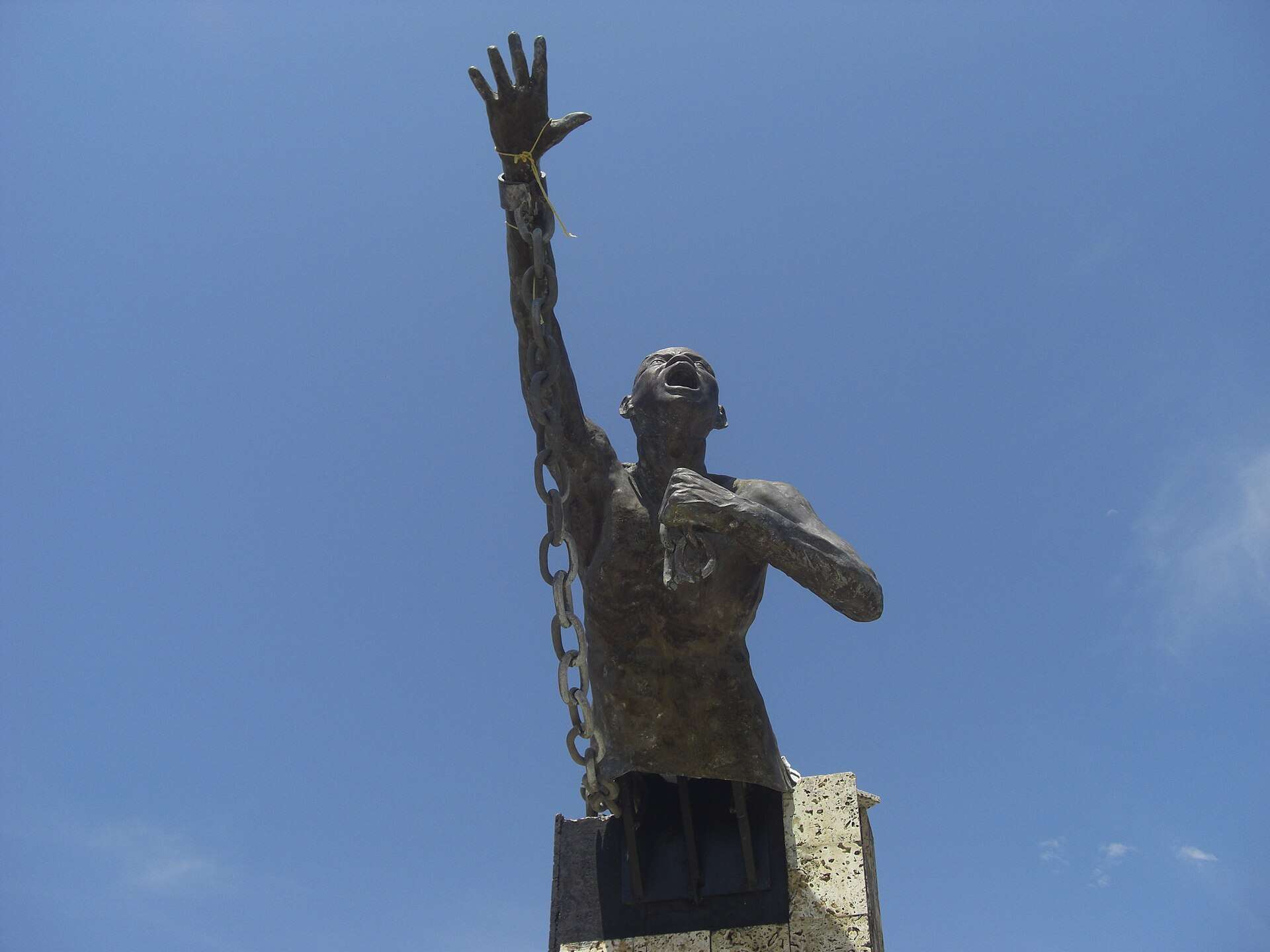
- Benkos Biohó’s statue anchors the main square — arms breaking chains, facing the church — and the guides’ telling of his leadership, capture, and execution by the Spanish in 1621 carries the founding story at the register it warrants.
- The living culture is the visit: lumbalú funeral music and the drum traditions that fed champeta, the kuagro social structures that organize the town, medicinal-plant knowledge, and the sweets economy — the palenqueras balancing fruit and dulces across Cartagena’s postcards are this town’s daughters, and per the alarm, here the story behind the image arrives whole.
- The town’s own pantheon runs deep: boxing world champion Antonio Cervantes ‘Kid Pambelé’ — whose statue shares the town’s pride — and the musical dynasties whose sound moved from these streets to Colombia’s charts.

Getting there
The community-tour arrangement per the alarm handles the logistics whole: transport from Cartagena, the Palenquero guide who is the visit’s actual substance, and the itinerary the town itself has shaped — typically the square and Biohó’s statue, the cultural center, a music demonstration with the town’s drummers, home visits where invited, and the sweets tasting from the source. Independent arrival works only when it converts into hiring a local guide on the spot; wandering unguided misses the town’s own telling and the point. Photography follows the guide’s word and individual consent — per the alarm’s listen-more clause.
The visit
The square opens it: Biohó’s statue read properly — the escape, the fortified decades, the treaty, and the 1621 execution that the freedom outlived — with the church and the town’s daily rhythm around it. The cultural center and the guides’ own histories carry the language: Palenquero’s Bantu grammar under Spanish vocabulary, the near-loss generations, and the revival now taught in the town’s schools — hearing it spoken is the visit’s quiet centerpiece. The music session lands the tradition physically: the drums’ patterns, lumbalú’s funeral roots, and the line the guides draw from these rhythms to champeta’s modern sound. The sweets, the medicinal garden, and Kid Pambelé’s statue round the circuit at village pace. The register throughout is the alarm’s: a living town narrating itself, visitors as guests rather than audience, and the story — escape, resistance, treaty, survival, renaissance — arriving whole rather than as Cartagena’s postcard fragment.
When to go
December through April runs the dry-season roads and the town at its daily rhythm. October brings the Festival de Tambores — the drum festival that fills Palenque with music, dance, and diaspora visitors, the town at maximum voltage and the one date worth building a Cartagena trip around. Rainy-season visits (roughly May–November) work with flexible timing on the unpaved final stretch. Any month, the morning departure beats the coastal heat, and the half-day shape returns you to Cartagena by mid-afternoon with the day’s second half intact.
Frequently Asked Questions
Why is a guide non-negotiable here?
Because the town is the teller, not the exhibit — Palenque’s community tourism exists so its history, language, and traditions are narrated by Palenqueros on their own terms, and the guiding economy keeps the benefit local. Unguided wandering gets streets without meaning and photographs without consent. The alarm’s framing is the town’s own.
What exactly was the treaty?
After decades of failed military expeditions against the palenques, the Spanish crown’s authorities recognized San Basilio’s freedom by agreement in the early 1700s — the town self-governing, its people free, in exchange for peace terms. The date and clauses are told with the guides’ precision on site; the headline stands: legal freedom won by resistance, a century-plus before abolition.
Is Palenquero really a separate language?
Fully — a creole with Kikongo-rooted grammar and largely Spanish vocabulary, unintelligible to Spanish speakers, and the only Spanish-based creole of its kind in the Americas. It survived centuries of stigma, neared extinction in the mid-1900s, and now runs through the town’s schools and music as a revival the community counts among its proudest works.
How should I handle photography?
By the guide’s word and individual permission — the alarm’s listen-more-than-you-shoot clause is the whole etiquette. The palenqueras’ image funds Cartagena’s postcard economy; in their hometown, the courtesy is asking first and accepting no. Music sessions and the square generally welcome cameras; homes and elders decide for themselves.
Palenque or the Rosario Islands from Cartagena?
The Rosarios (documented on this network) for reef water and beach-day logistics; Palenque for history that reframes everything Cartagena’s walls mean. Opposite registers entirely — and the honest Cartagena week does both, letting the town’s story deepen the city’s rather than compete with the beach.